
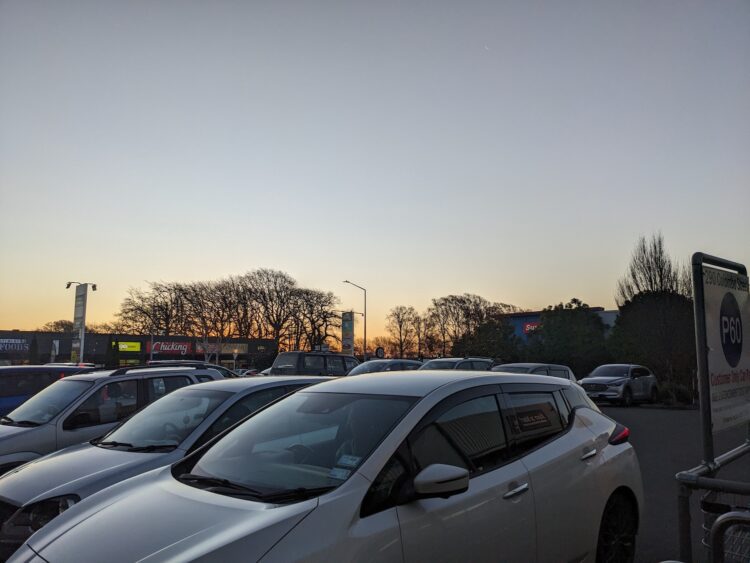
On cold mornings, sun starts to melt the white frost clinging to grass on the berm. Cars drive off to work. I notice the car-shaped puddles of frost where the cars were parked, a hundred anti-shadows.
In Ankara and Beijing, the streets are wide, and the cars go fast (when they’re not stuck in traffic). There are barriers in the middle of all the main roads; as a pedestrian, you invariably have to walk around several hundred metres to an overpass or underpass or traffic light.
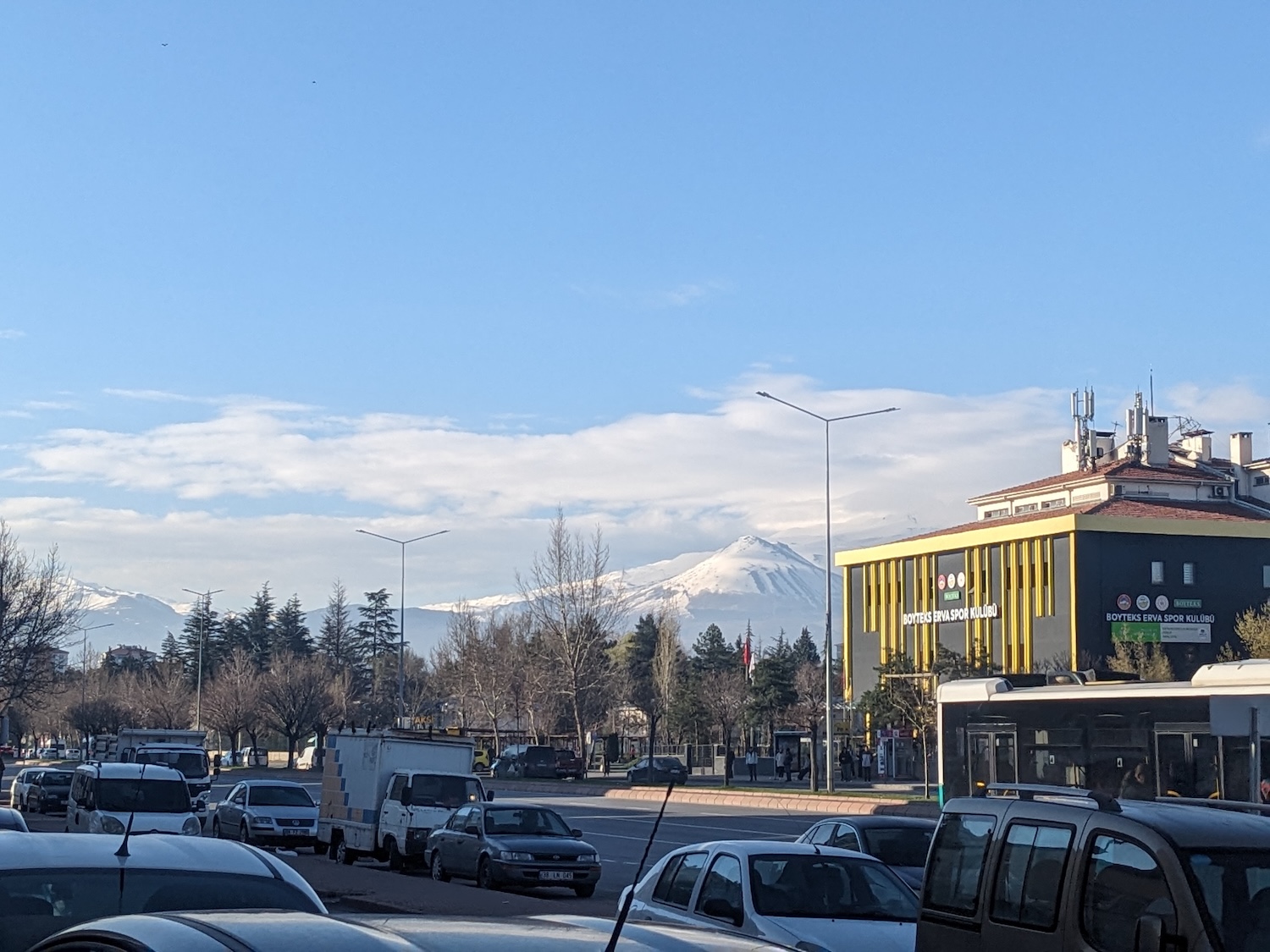
In Kayseri, the early morning streets are empty, and light falls on Mount Erciyes, a cone of snow that is visible for the next 70 kilometres. We weave out of the city, getting used to carrying our fully loaded bikes over overpasses, cars zooming below. Often, there are no steps or ramps; it’s hard to imagine what it would be like if we didn’t have the physical strength to lift our wheels. How do disabled people traverse these cities?
We meet someone in Turkiye who invites us to stay with him and his mother, an incredibly generous offer for two tired cyclists. We leave most of our bags at their apartment and do a quick 20km round trip to a nearby lake, loving how it feels to not have any weight on our bikes. In the evening, he goes to pray, then takes us out for Turkish ice cream (dondurma). He takes us in his car. It turns out that the icecream shop is two minutes drive away, but he prefers to drive.
Someone we visit in South India complains about the traffic. He’s moved somewhere much closer to his work so he doesn’t have to drive. “There are so many cars,” he says, and he’s right. He’s worked as a car dealer for the last 20 years; many of those cars are ones he sold.
On the way south, sitting with family in the car, the conversation keeps turning to the new freeway linking the two cities they travel between. The car weaves in and out of the traffic. I don’t see much of the landscape as the twilight thickens.
I am so proud of myself for biking back from the airport in Auckland and Christchurch at the end of our long trip. I keep finding ways to work it into the conversation. Obviously I am a very annoying person. People who drive cars don’t often work the distances they’ve travelled into conversation like this. Do I have any right to feel pleased with myself, or should this just be normal?
Once the bikes are boxed again, we can’t ride them to the airport. I’m not taking the $25 chance that Air New Zealand will have boxes. We order an extra big Uber, which can fit two bike boxes, but not two passengers. I sprint to the bus, sprint to the train and still miss the second bus to the airport while Shreyas frets. I get an Uber for the last leg instead, frustrated that public transport is so inadequate.
Two trips, two cars each time, to get all our possessions out of the storage unit. I am grateful for all the room in the back; annoyed by other cars as I drive. Where are all these people going?
We get furniture for our new house, and debate how to get it from distant suburbs to our home. Despite being car-free, theoretically, we have easy access to a vehicle someone stores at my parents house. I vaguely discuss the possibilities of picking it up with a bike trailer, knowing that I don’t like having a bike trailer and I’m going to choose the car. There’s a sense of inevitability. We pick up the fridge and I make a comment about parking to the seller, feeling as I do that I am some other kind of woman, that journeys to random parts of the city, stabilising whiteware with my legs crunched up because the seat is so far forward, is somehow an adventure.
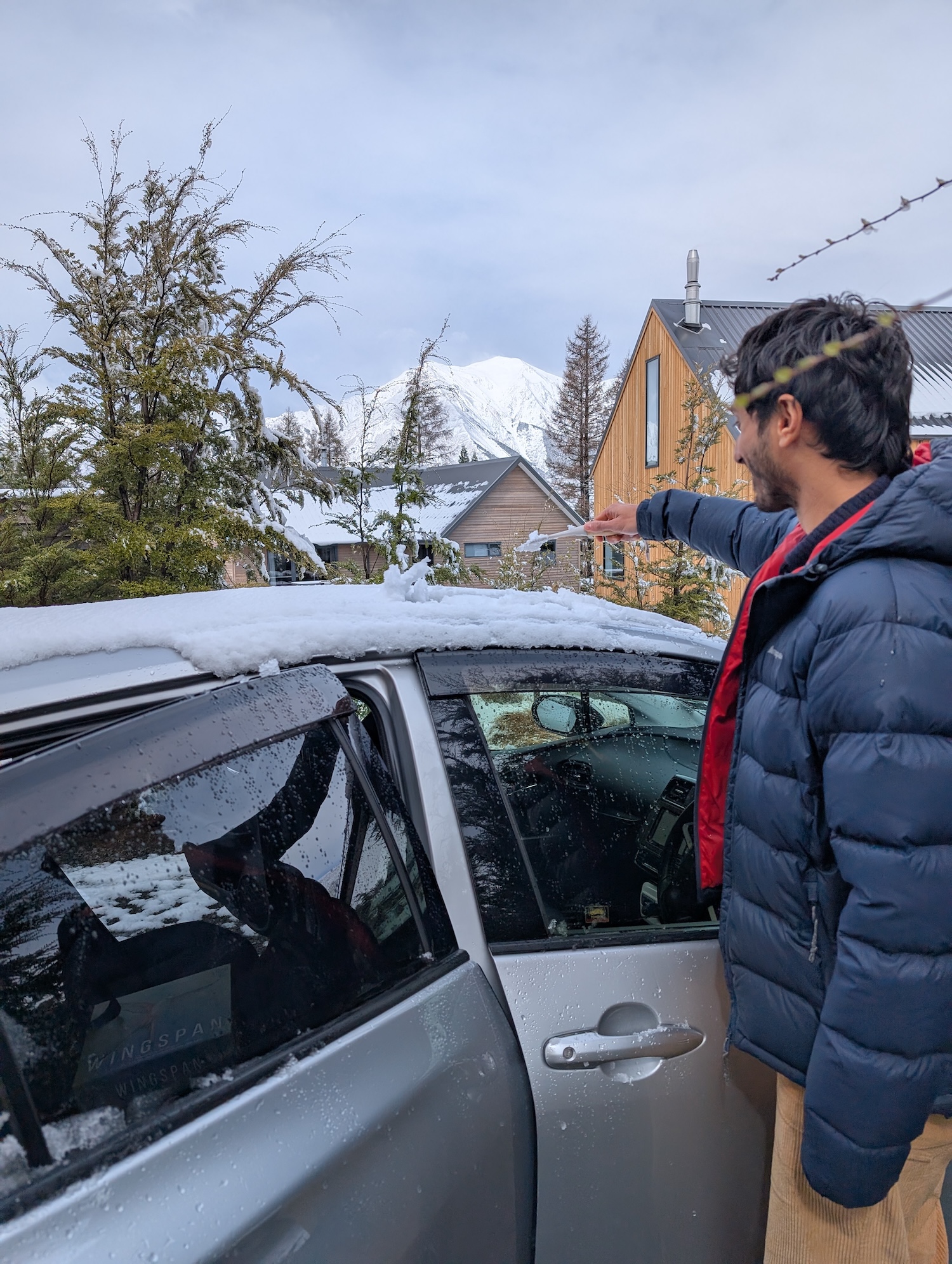
Our garage fills with bikes, with skis, with boxes of fabric, with tools, with stuff that really should go to the op-shop. I wonder how people manage to fit cars in their garages on top of everything else.
I get a ride in a car to orchestra, which has a very positive effect on my attendance. Every time, there’s a game of parking. Often we have to park several hundred metres away, and carry our instruments through the night. Of course, I don’t blame the double bass players for needing a vehicle. I feel a kinship with the flautist who cycles.
I get off the ferry in Wellington and walk to the beach, wanting to wash off the sense of sitting all day. I was going to linger and read my book on the grass, but behind me, two young men are talking loudly about their car insurance plan, in more detail than seems possible. “And so I compared the prices of the new tyres…. My cousin’s car was a write off but he got way more for it than he would have sold it for… my door was buckled in but the excess was only $200.” Luckily Éimhín texts me and invites me to drink beer in the sunshine on their flat’s roof. I am more than happy to accept.
 Low-carbon adventure: Crater rim, spring swims, craft whims
Leave a comment
Your email won't be published, but is used to retrieve your Gravatar.